what is pickleball
author: Cathy wang
2025-09-06
Pickleball: A Rising Star in the World of Sports
In recent years, a sport called pickleball has been steadily capturing the attention of enthusiasts around the globe. With its unique blend of elements from tennis, badminton, and table tennis, pickleball has carved out a niche for itself as a fun, accessible, and engaging pastime for people of all ages and skill levels.
The Origin Story
Pickleball was born in 1965 on Bainbridge Island, Washington, USA. The credit for its invention goes to Joel Pritchard, Bill Bell, and Barney McCallum. One summer day, while their families were looking for an entertaining activity, they improvised a game on a badminton court. Lacking the complete badminton equipment, they used ping - pong paddles and a plastic ball with holes. Joel Pritchard's wife, Joan, named the game "pickleball." Some say the name was inspired by the "pickle boat" in crew, where oarsmen were chosen from the leftovers of other boats, much like this hybrid sport.
The Rules Simplified
Gameplay Basics
Pickleball can be played in singles (two players) or doubles (four players). The objective is simple: hit a perforated, hollow plastic ball over a 34 - inch - high (0.86 m) net using a smooth - faced paddle. The game continues until one side is unable to return the ball or commits a rule violation.
Serving Rules
All serves in pickleball are made underhand, with the paddle - ball contact point below the server's waist. The server must stand behind the baseline when serving. The serve must be directed diagonally across the net to the opponent's service court.
The Non - Volley Zone (The Kitchen)
On each side of the net, there is a 7 - foot (2.1 m) area known as the non - volley zone, affectionately called "the kitchen." Players are not allowed to volley the ball (hit it in the air without it bouncing first) while standing within this zone. This rule adds an interesting strategic element to the game, as players must carefully time their entries and exits from the kitchen.
Scoring System
The game is typically played to 11 points, and a team or player must win by at least 2 points. Only the serving side can score a point. If the score reaches 10 - 10 (deuce), the game continues until one side has a 2 - point lead.
Court and Equipment
The Court
A pickleball court is 44 feet (13.4 m) long and 20 feet (6.1 m) wide, which is approximately the size of a doubles badminton court. The court is divided into two equal - sized halves by the net. The non - volley zone extends 7 feet from the net on each side. The court surface can be either indoor (such as on a wooden or synthetic floor) or outdoor (on asphalt, concrete, or specialized outdoor court surfaces).
The Paddle
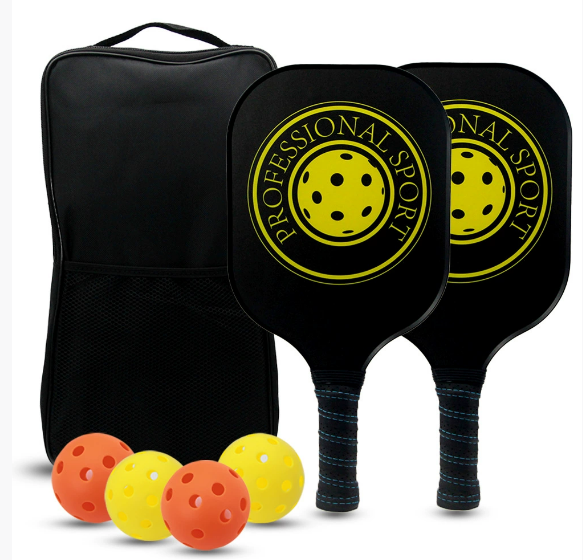
Pickleball paddles are larger than table tennis paddles but smaller than tennis rackets. They are made of various materials, including wood, composite materials like graphite or fiberglass, and even some high - tech materials for more advanced players. Paddles typically have a smooth face and are designed to provide a good balance between power and control.
The Ball
The pickleball itself is a hard plastic, hollow ball with 26 holes. These holes reduce the ball's weight and aerodynamic resistance, causing it to bounce less than a tennis ball. The ball comes in different colors, with yellow and white being the most common colors used in official play.
The Appeal of Pickleball
Easy to Learn
One of the main reasons for pickleball's growing popularity is its low learning curve. Beginners can quickly grasp the basic rules and start playing a competitive game. The simple underhand serve, the relatively slow - moving ball compared to tennis, and the defined non - volley zone make it accessible for people new to racket sports.
Suitable for All Ages and Fitness Levels
Whether you're a child just starting to explore sports or a senior looking for a low - impact activity, pickleball has something to offer. The lightweight ball and the nature of the game, which involves short bursts of movement, make it easy on the joints. It provides a great opportunity for physical activity without the high - impact stress associated with some other sports.
Social Aspect
Pickleball is not just a sport; it's a social activity. It's common to see players chatting, laughing, and enjoying each other's company between points. The doubles format, in particular, encourages teamwork and communication. It's a great way to meet new people, make friends, and build a sense of community.
The Growth of Pickleball
In the United States, pickleball has experienced explosive growth in recent years. The Sports and Fitness Industry Association has named it the fastest - growing sport in the US for three consecutive years (2021 - 2023). By 2023, it was estimated that there were over 8.9 million players in the US. Professional tours and leagues have been established, attracting top - tier players and bringing more attention to the sport.
Beyond the US, pickleball is also gaining popularity globally. In Australia, a professional league is already up and running, and in India, a league is being developed for the 2025/26 season. As more people around the world discover the joy of pickleball, it seems likely that its growth will continue unabated.
In conclusion, pickleball is a sport that offers a unique combination of fun, fitness, and social interaction. Its humble beginnings have led to a global phenomenon, and as it continues to grow, it's sure to bring more people together through the love of the game. So, if you haven't already, why not give pickleball a try? You might just find your new favorite sport.
Who Is Pickleball Suitable For?
Related Article